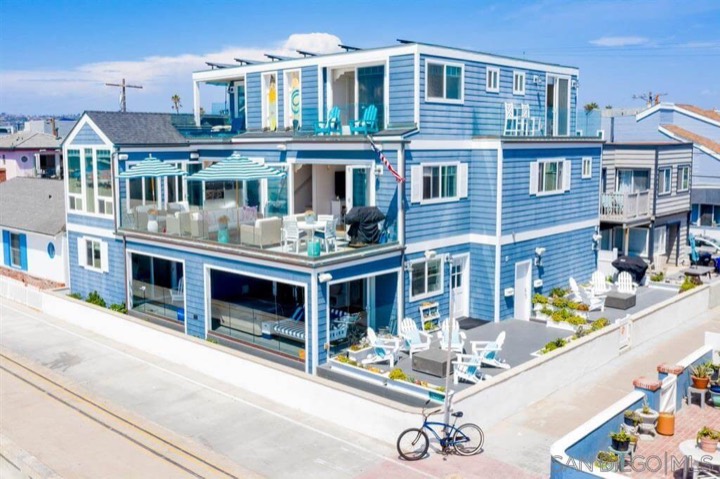
A buyer stood at the glass once and told me the house had no flaws. She meant the view. The water was doing the thing water does at that hour, and the room had gone quiet around it.
I let her have the moment, because it was a true one. Then I asked her to come back the following week and walk the seaward edge of the lot with me instead of the living room. That walk is the one that decides whether a bluff home is a good purchase or only a good photograph.
People buy the view. The bluff is what they actually own. The two are not the same thing, and the distance between them is where most regret lives.
The Land Under the View Is Still in Motion
A bluff looks permanent because it changes on a timeline longer than a showing. But erosion is not a defect in a coastal property. It is the normal behavior of the coast. Sand and stone move. The edge migrates landward over decades. A bluff that has been stable for a generation is not promising you the next one — it is simply telling you it has not yet had its reason.
This is why the serious question is never whether the bluff is stable. The honest question is stable over what period, and who measured it. In San Diego, bluff-edge property sits inside Environmentally Sensitive Lands rules, and the edge itself is established by geotechnical analysis rather than by eye. Practice usually begins with a substantial setback from the determined edge and then enlarges it based on the projected erosion over the structure's design life — often calculated across a seventy-five-year horizon with required margins of safety.
That number on a survey is not bureaucratic caution. It is the land's behavior translated into feet.
The sea you can see from the window is the easy part. The bluff under the window is the part you marry.
The House Lives Inside Permissions It Did Not Choose
A bluff home carries a second set of conditions that have nothing to do with how it feels to live there and everything to do with what you are allowed to do to it.
Much of the bluff coast sits in the appealable zone of the California Coastal Commission — broadly, the band between the first public road and the sea, or within a few hundred feet of a beach or bluff top. What this means in plain terms is that the things an inland owner takes for granted — adding on, rebuilding, reinforcing, protecting — arrive with review, timelines, and conditions.
Shoreline armoring is its own long conversation. The Coastal Act has discouraged seawalls and hardscape protection for decades, on the reasoning that armoring one property can accelerate erosion on the beach below and beside it. Even repairs to older seawalls require permits. None of this is a reason to walk away. It is a reason to know what you are standing on before you fall for what you are looking at.
Coastal Distinction
A bluff is not a feature you acquire — it is a relationship you agree to maintain.
What the Records Carry, and What They Stay Quiet About
Across Donna's source records — over two hundred coastal property files, the active and the long-since-sold — the bluff signals are easy to find and easy to misread. Listings speak in blufftop, oceanfront, panoramic, perched. They describe gated arrivals and seawalls and floor-to-ceiling glass facing the water. Those are real attributes. They are also the optical half.
What the records show in aggregate, when you read enough of them, is that the language of the view and the language of the edge live in the same paragraph and rarely explain each other. A file will note a seawall without noting what permitting that seawall now requires. It will celebrate proximity to the sand without naming the exposure that proximity buys. I read these records as a set of conditions, not a set of highlights. The signal that matters most — setback, edge determination, the maintenance history under the salt — is usually the one the marketing copy is quietest about. That silence is not deception. It is simply the part of the truth that doesn't photograph.
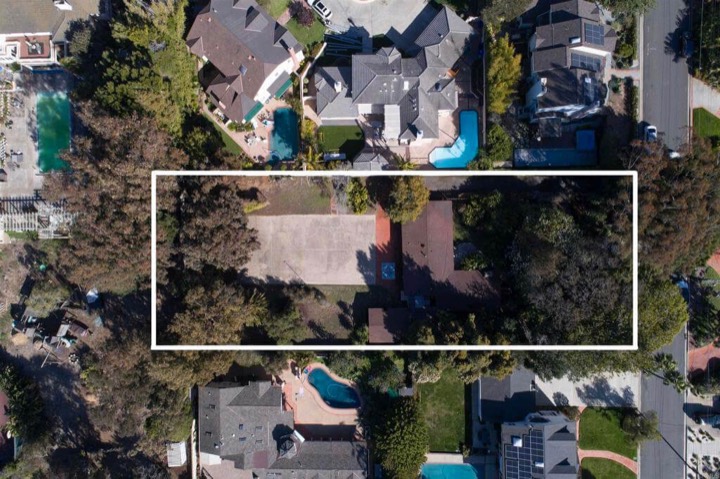
What to Walk Before You Fall in Love
When a client is serious about a bluff home, here is what I want investigated before the view is allowed to win the argument.
The geotechnical record: who determined the bluff edge, when, and what setback the analysis supported over the building's design life. The permitting posture: whether the property sits in an appealable area and what that means for any future change. The armoring story: if there is a seawall, its age, its permit history, and its standing under current rules. The maintenance ledger: when the exterior was last sealed, how the windows and hardware are holding, what the owner actually spends to keep salt from winning.
And the insurance reality: standard policies exclude gradual earth movement and coastal erosion. Separate coverage is often required. Some lenders now want a geotechnical report before they will finance the loan at all. A buyer who learns these things after closing has discovered the cost. A buyer who learns them before has chosen it.
The difference is everything.
The Edge Keeps Terms
Some buyers want the bluff. They understand they are stepping into a relationship with land that has its own intentions, and they find that worth the upkeep, the review, the slower clock. Others want the view and have not yet met the bluff that comes attached to it.
My work is to make sure the second kind becomes the first kind before the papers are signed. Not to talk anyone out of the edge — the edge is one of the finest places to live a life. Only to make certain that when you stand at that glass and say the house has no flaws, you are saying it about the whole house, including the part of it that is still, quietly, in motion.
Use the guided source records as the starting point for a deeper read: bluff stability, setbacks, armoring, permitting posture, salt and wind exposure, and the maintenance ledger for coastal-edge properties. Source records are curated references, not a live MLS/IDX feed.