
A listing will tell you the home has an ocean view. It rarely tells you whether the ocean has anything to do with the home.
Those are not the same claim, and the gap between them is where most coastal disappointment is born. You buy a frame of water. You move in. Then you notice the sea was only ever something you looked at, not something you lived beside.
I read coastal property as a set of conditions, not a set of features. A view is a feature. Presence is a condition. The first can be photographed and sold in an afternoon. The second reveals itself across hours, weather, and seasons, which is exactly why it gets left out of the pitch.
Why the View Is the Easy Part
Glass is generous to sellers. Point a wide enough window at the water and the room will perform on cue, especially on a clear day with the light behind the camera. The view does real work; I am not dismissing it. A horizon line changes how a room feels to occupy, and water in a sightline lowers something in the body that nothing else replaces.
But a view is optical. It enters through the eyes and stops there. You can have an unbroken stretch of blue in your living room and a house that, in every other respect, could be sitting much farther inland. Sealed glass, an indifferent orientation, a layout that turns its back on the breeze, and you have purchased a painting that happens to be real.
Anyone can sell you the water through a window. What I look for is whether the sea ever comes inside.
What Presence Actually Does
Presence is the sea entering the house through more than the window. It is the sound of surf carrying into a bedroom at night, steady enough that you stop hearing it and start sleeping to it. It is morning air moving through the rooms because the home was built to let it. It is the marine layer arriving and the house knowing how to hold a gray hour without going cold or dim.
It shows up in thresholds, in whether a door to a deck is a real passage or a decorative gesture you keep shut against the wind. It shows up in salt on the railings and haze building on the glass faster than you expected, because the air outside is doing something. The sea is beautiful and it is physically active. A home with presence is in a daily relationship with that activity, and that relationship leaves marks.
This is the distinction I keep returning to with clients: ocean view is what you see, ocean presence is what reaches you when you are not looking.
Coastal Distinction
A home can hold the ocean in its windows and still not live with the sea.
What the Source Records Keep Showing
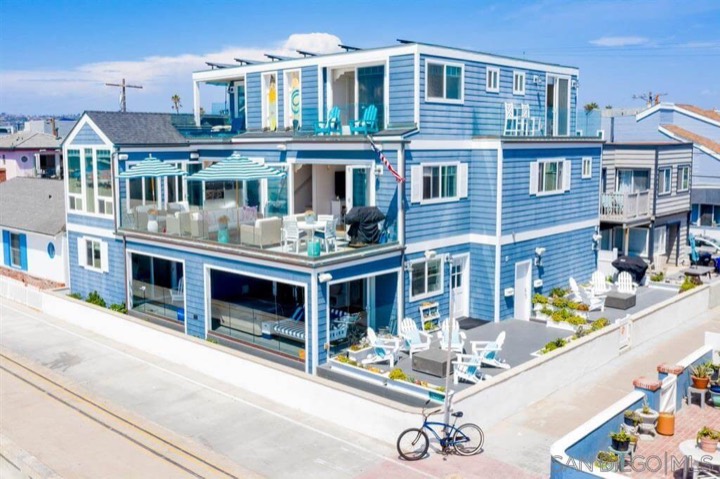
Across Donna's source records, the same conditions surface again and again, and not by accident: oceanfront and bluff exposure, rare beach access, gated arrival, privacy, floor-to-ceiling glass opening to main living areas, view decks, oceanfront lounges, and the language of waves, breezes, and long coastal light. These are not decorations scattered across listings. They are the vocabulary of homes designed around the coast rather than merely aimed at it.
That body of records teaches a simple thing: presence has a grammar. The homes that truly live with the sea tend to combine several conditions at once, because no single feature creates presence on its own. A view deck means little without breeze and a usable threshold. Glass means little if the room behind it cannot open to the air. The whole is what carries the ocean inside, and the whole is what I am reading when a photograph only wants me to count the windows.
How to Test a View for Presence
Before you decide a view is presence, make the house prove it. Go back at a second hour, ideally in a different weather. A frame that dazzles in one condition and disappears into glare or gray in another is telling you something about exposure you need to hear.
Open everything that opens. Stand in the doorway to the deck or terrace and feel whether the breeze is a gift or an assault, and whether the room stays usable once you let the coast in. Listen with the glass closed, then open, so you know which sounds belong to the house and which belong to the sea. Look at the railings, the hardware, the screens, the underside of the eaves. Salt and marine moisture write their own report on a building, and that report tells you how active the air really is here.
Ask what the home asks back. Coastal exposure works on glass, finishes, metal, and decks on a faster clock than inland air does. Presence is not free. It comes with a maintenance rhythm, and a house worth having is honest about that rhythm rather than hiding it under fresh paint for the showing.
And learn the microclimate at the door, not the region. Near the immediate shoreline, the marine layer can hold long into the morning while the sun is already out a short distance back. That difference decides how your mornings actually feel. It is not in the listing. It is in the place.
The Decision Underneath the View
When clients tell me they want the water, I slow the sentence down. Do you want to see it, or do you want to live with it? Both are legitimate. They are simply not the same purchase, and they age very differently in your hands.
A view will satisfy the eye on the day you buy it. Presence is what you live inside on the ordinary mornings nobody photographs, when the air is doing its work and the rooms answer it. One is a moment. The other is a relationship. I would rather you choose it knowing which one you are signing for.
Use the guided source records as the starting point for a deeper read: water in the frame, ocean in the rooms, threshold, breeze, sound, exposure, and the maintenance rhythm that comes with coastal presence. Source records are curated references, not a live MLS/IDX feed.